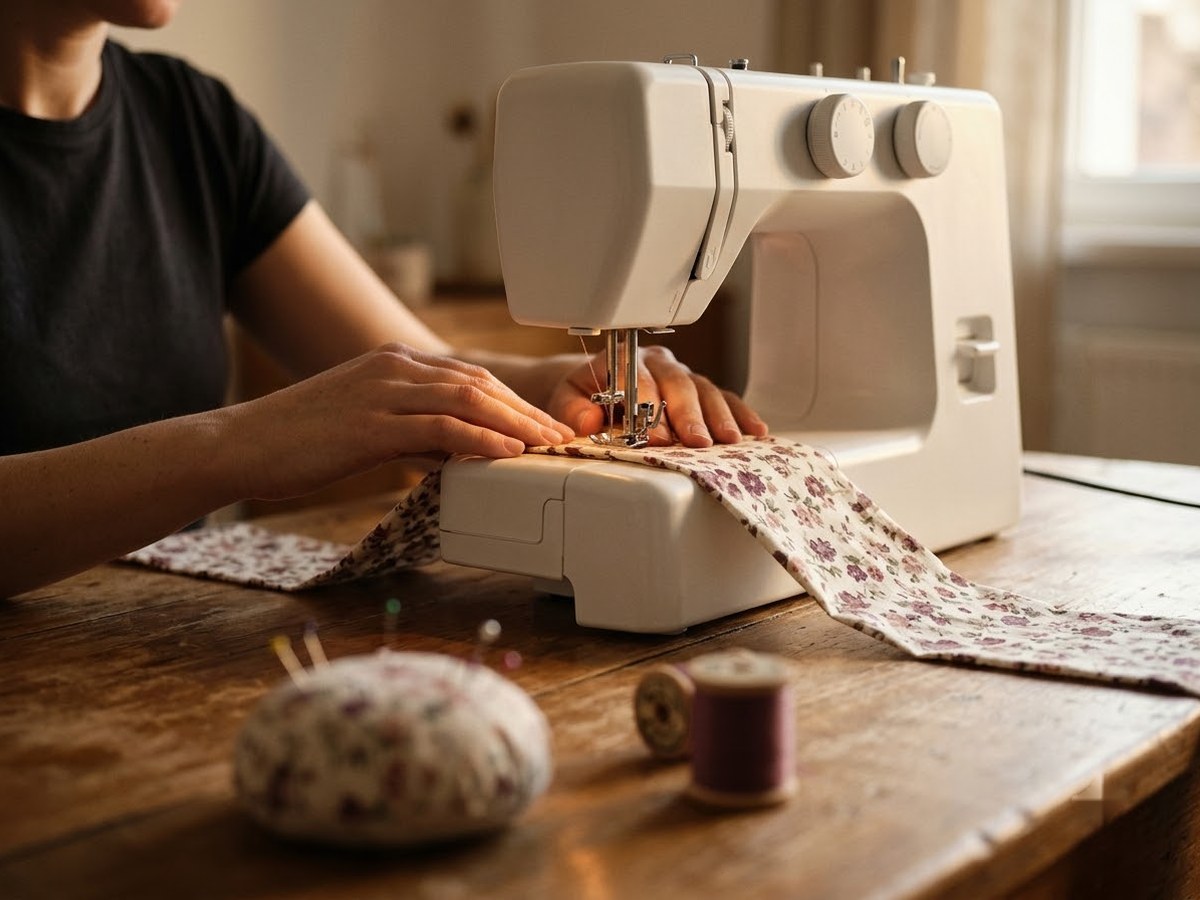
Yes. Most people can teach themselves to sew on a machine at home, and good beginner guides are written for exactly that. Seamwork’s beginner course is aimed at self-guided learners and boils the method down to two habits: start small and practice often. With a simple project, a machine that is easy to thread and an hour or two a week, you can sew straight seams, corners and a tote bag within your first few sessions.
Teaching yourself has limits. Fitting clothes, sewing slippery fabrics and fixing tension problems are easier with someone beside you, and that is where a class pays off. NMSU Extension notes that independent sewing shops usually offer lessons, and some brands sold through dealers include them. Many people mix the two: learn the basics alone, then book a class for the trickier skills.
What you actually need to learn first
Machine sewing looks complicated because a new machine arrives with dozens of stitches and a bag of presser feet. In practice, beginners use very few of them. Singer says beginners mainly need the straight stitch for seams, the zigzag for finishing edges and knits, and the buttonhole stitch. An FIT professor quoted by NBC Select put it more bluntly: for a beginner, all you need is a machine with a great zigzag and straight stitch.
That narrows the first skills to a short list you can practice in any order:
- Threading the machine and winding a bobbin. Singer says to always raise the presser foot before you thread; Threads magazine explains that with the foot down, the thread cannot slip fully between the tension discs.
- Sewing a straight line at a steady speed. Guide the fabric lightly and let the feed dogs pull it through. Singer warns that pushing or pulling the fabric deflects the needle and can break it.
- Starting and ending a seam. A few reverse stitches (backstitching) lock the thread so the seam does not unravel.
- Turning a corner. Stop with the needle down, lift the presser foot, pivot the fabric and lower the foot again.
- Finishing an edge with zigzag. A zigzag along a raw edge keeps woven fabric from fraying.
Seamwork suggests practicing straight and zigzag rows on rectangles about 6 by 4 inches before your first real project. It is dull, but it is the fastest way to stop the fabric drifting and to feel how the foot pedal responds.
Features that make self-teaching easier
A machine cannot teach you to sew, but some features remove the problems that make beginners give up in the first week. Look for these when you buy:
| Feature | Why it helps when you are on your own |
|---|---|
| Automatic needle threader | Singer calls it a huge time-saver that reduces frustration for beginners. |
| Drop-in (top-loading) bobbin | Singer recommends it for beginners because it is easier to load and monitor; Consumer Reports notes the clear cover shows when thread runs low. |
| Speed control slider | Singer says adjustable speed control helps new sewists learn more safely, so you can sew slowly without a heavy foot. |
| One-step buttonhole | Singer says a one-step foot measures the button so every buttonhole comes out the same. |
| Start/stop button | HGTV likes it for beginners because you can sew without first mastering the foot pedal. |
Budget pick with the essentials · Budget price range
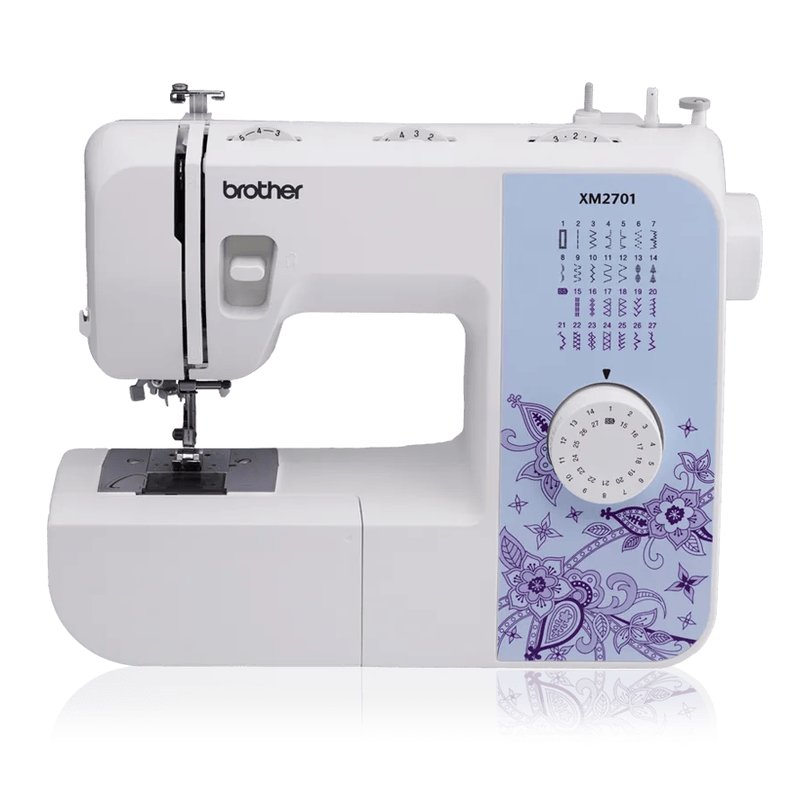
Brother XM2701
A dial machine at a Budget-tier price that still has an automatic needle threader, a drop-in bobbin and a one-step buttonhole, according to Brother.
See what’s in the box ›Fewer stitches can actually help. Gathered advises beginners to choose limited features because too many can feel overwhelming. You will not miss 150 decorative stitches in your first year, but you will notice a bobbin that is hard to load every single time you sew.
Good first projects, in order
The best first projects are flat, use quilting cotton and have only straight seams. Seamwork calls quilting cotton the easiest fabric to start with and suggests saving denim and canvas for later. These projects build skills in a sensible order:
- Pillowcase. BERNINA’s WeAllSew blog calls pillowcases perfect first projects, and 4-H learn-to-sew programs at the University of Illinois and Cornell start young sewists on them.
- Tote bag. Seamwork recommends a tote bag as a first project because it has few seams and teaches basic sewing vocabulary.
- Hot pads or a table runner. Utah State University Extension publishes free beginner patterns for both.
- Elastic-waist pajama pants. FaveCrafts labels them a beginner project and says even beginners can finish a first piece of clothing in an evening.
Basic supplies to have ready
- Utah State University Extension lists straight pins, a pincushion, dressmaker shears, a non-stretch tape measure, a seam ripper and a container for supplies.
- Seamwork adds chalk or a fabric marker and an iron and ironing board.
- A designer quoted by NBC Select advises spending a dollar or two more on quality thread.
- Seamwork recommends pre-washing and pressing fabric before you cut it.
When a class is worth it
You can learn a lot from written guides and video, but some skills are much faster with feedback. A class is worth booking when:
- Your stitches look wrong and rethreading has not fixed them. Threads magazine says incorrect threading causes more tension problems than anything else, and a teacher can help you check it.
- You want to make clothes that fit. Taking measurements and adjusting patterns is hard to learn from text.
- You are teaching a child and want them to learn safe habits from the start.
- You bought from a dealer that includes lessons. NMSU Extension notes some dealer-only brands come with classes.
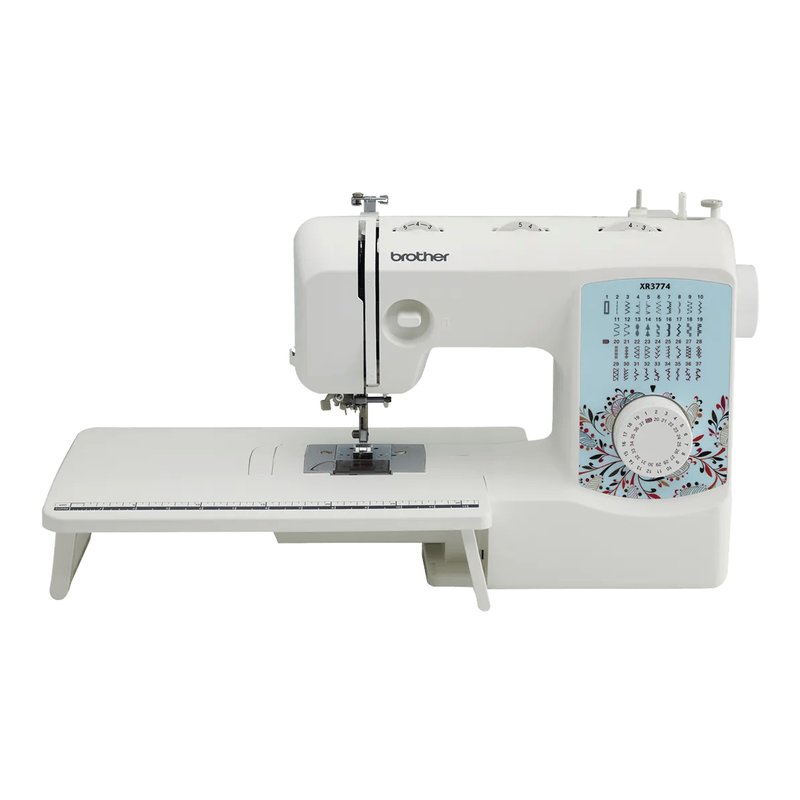
Simple dials, ready for quilting · Mid-range price range
Brother XR3774
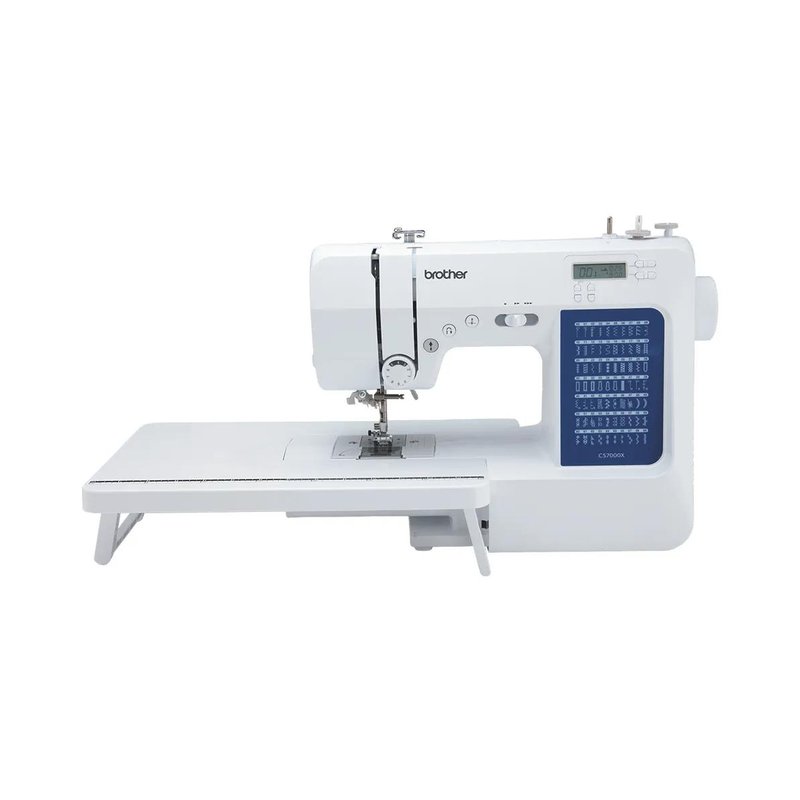
A mechanical machine with 37 stitches, a one-step buttonhole and a wide table and walking foot in the box, per Brother. NBC Select names it its best overall beginner machine.
Check included feet & accessories ›If you prefer to learn alone, set a small goal for each session: one practice rectangle, one corner, one finished seam. Short, regular sessions build skill faster than one long weekend.
Honest note
Self-teaching works best on a machine that behaves. If your machine skips stitches, nests thread or jams no matter what you do, the problem may be the machine or its setup, not you. Check the threading, the needle and the bobbin first, and if that fails, ask the seller or an authorized service center before you decide sewing is not for you.
A simple first-month plan
If you like a plan, this one keeps each step small and builds on the last:
- Week 1: read the threading and bobbin pages of your manual, thread the machine three times, and sew straight and zigzag rows on practice rectangles.
- Week 2: practice corners and backstitching, then sew a pillowcase.
- Week 3: make a tote bag to practice boxed corners and topstitching.
- Week 4: try pajama pants with an elastic waist, your first piece of clothing.
Keep the manual next to the machine. Most beginner problems are covered in the troubleshooting pages, and the brand support sites from Singer and Brother publish the same advice online.
Questions people ask
Can I learn to sew without a class?
Yes. Seamwork’s beginner guide is written for self-guided learners and recommends starting small and practicing often. A class helps with fitting and troubleshooting, and NMSU Extension notes many independent sewing shops offer lessons.
How long does it take to learn to use a sewing machine?
Long enough to make a simple project is usually a few practice sessions. FaveCrafts says even beginners can make elastic-waist pajama pants in an evening once they know the basics, but fitted clothes take longer.
What should I practice first on a sewing machine?
Straight and zigzag rows on scrap rectangles. Seamwork suggests rectangles about 6 by 4 inches, then a tote bag as a first real project because it has few seams.
What is the easiest fabric for beginners?
Quilting cotton. Seamwork calls it the easiest fabric to begin with and suggests pre-washing and pressing it, and saving denim and canvas until you have more practice.
Do I need an expensive machine to learn?
No. An FIT professor told NBC Select that a $99 machine and a $5,000 machine do essentially the same basic job, and she suggested putting money into build quality rather than extra features.
Sources: Seamwork: How to sew clothes as a total beginner · NBC Select: Best sewing machines for beginners · Singer: Beginner sewing machines · NMSU Extension: Selecting a sewing machine · Utah State University Extension: Basic sewing supplies · WeAllSew: Basic sewing projects for beginners
Specifications are each brand’s own. Follow your machine’s manual for threading, needles and care, and switch off and unplug the machine before changing needles or cleaning it.