Buyer’s guide

Best Beginner Sewing Machine: Top Picks by What You Want to Make

For most beginners, choose a machine with an automatic needle threader, a drop-in bobbin, speed control and a one-step buttonhole. Our best overall pick is the Brother CS7000X; on a tight budget, the Brother XM2701 keeps the essentials, and for denim the Singer Heavy Duty 4452 is the sturdier choice.

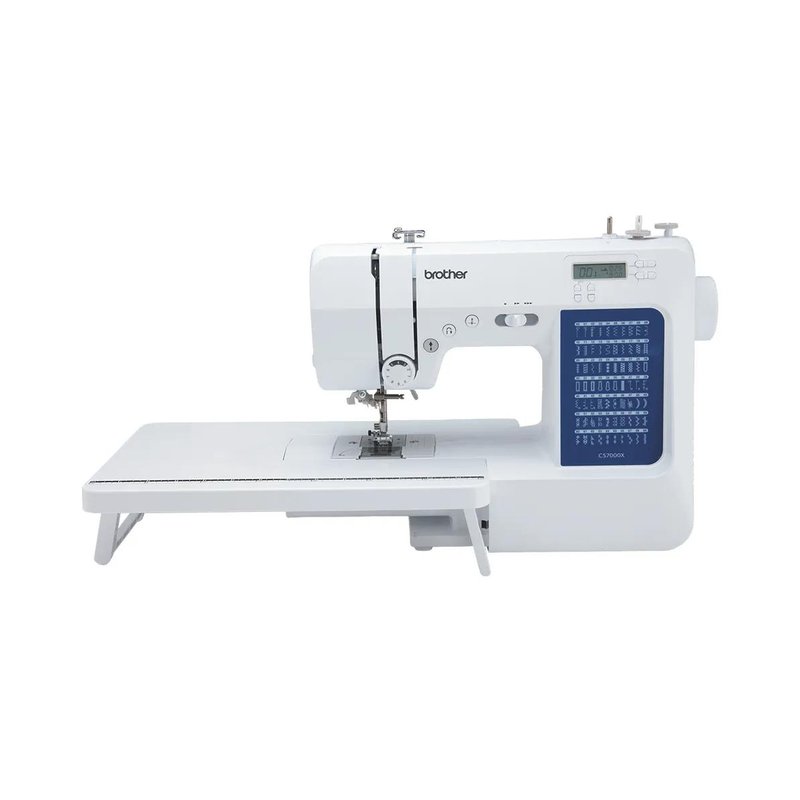
Brother CS7000X machine
Our #1 pick

Brother CS7000X

Mid-range price range

TypeComputerized, LCD
Stitches / designs70 stitches
ThreadingAuto needle threader, drop-in bobbin

See ratings & reviews ↗ · All 7 picks

Top picks at a glance

The best sewing machines for beginners, by what you need

Seven machines that cover what most beginners actually want to make: clothes, quilts, denim hems, gifts and embroidery. Each one is chosen for a reason, and each card says who should skip it.

Best overall#1
Brother CS7000X machine

Brother CS7000X

Mid-range price range

Automatic threader, drop-in bobbin, speed control, wide table and a walking foot: the most-picked first machine in current roundups.

See features ›
Best budget#2
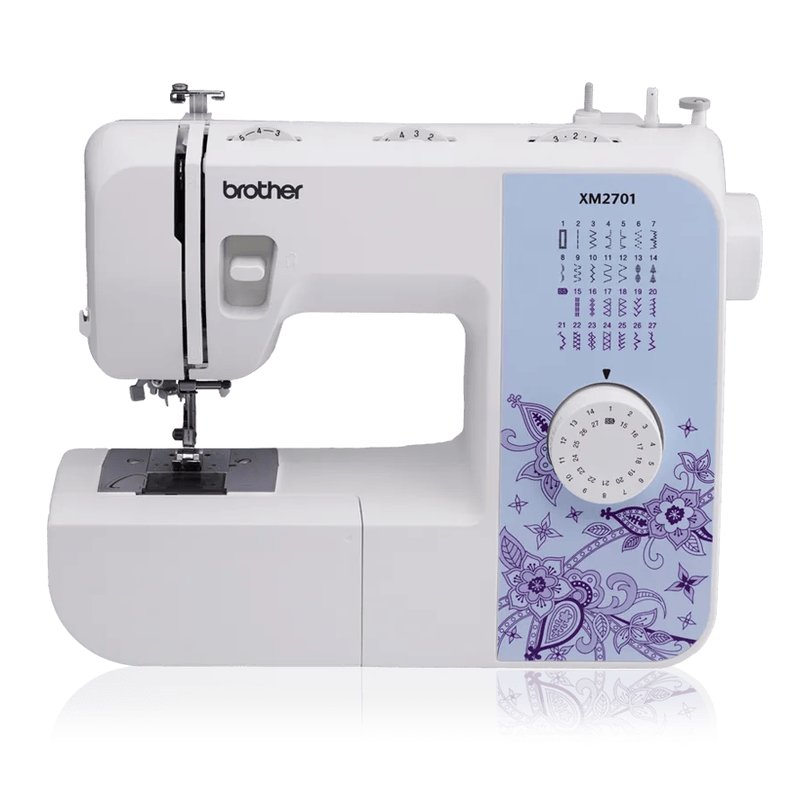
Brother XM2701 machine

Brother XM2701

Budget price range

A simple dial machine that still threads the needle for you and sews one-step buttonholes, at a Budget-tier price.

See features ›
Best for denim and heavy fabric#3
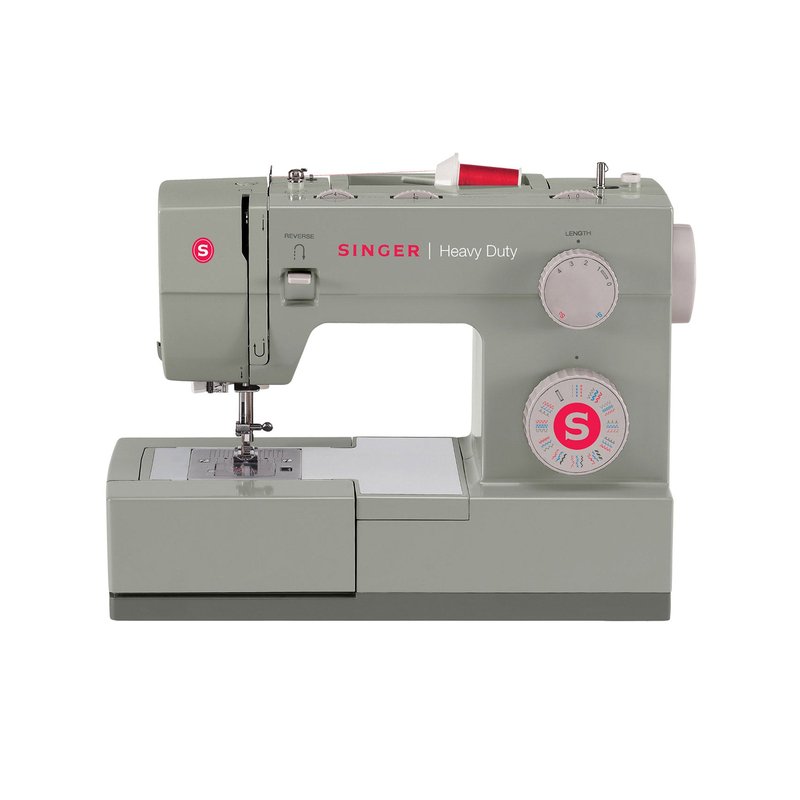
Singer Heavy Duty 4452 machine

Singer Heavy Duty 4452

Mid-range price range

Metal frame, a motor Singer calls 60% stronger than standard, plus walking and non-stick feet in the box.

See features ›
Best for quilting on a budget#4
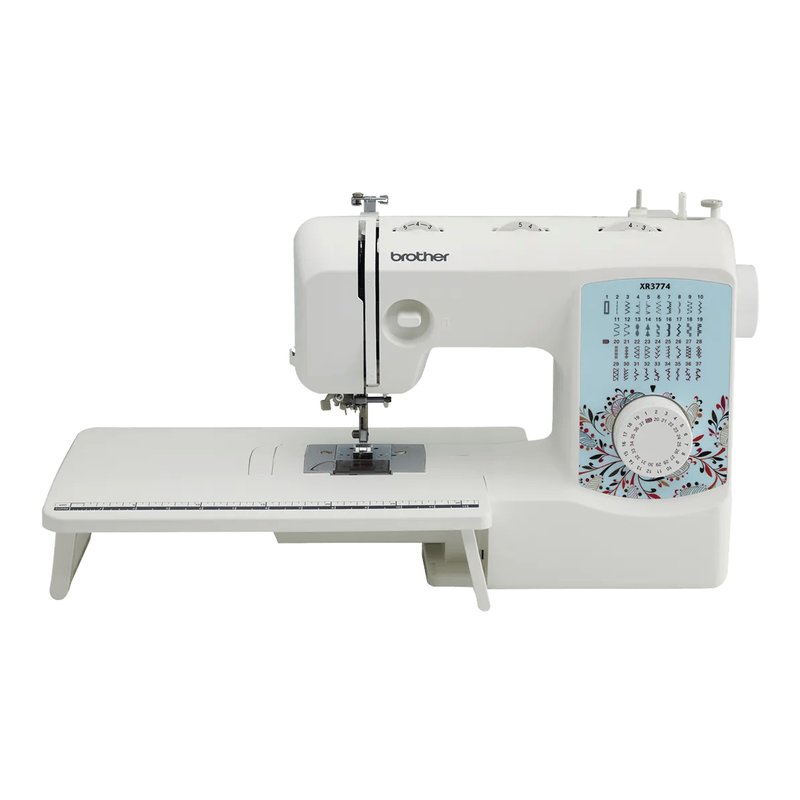
Brother XR3774 machine

Brother XR3774

Mid-range price range

A dial machine that ships with a wide table, walking foot and quilting foot; NBC Select’s best overall beginner pick.

See features ›
Best for lots of stitches#5
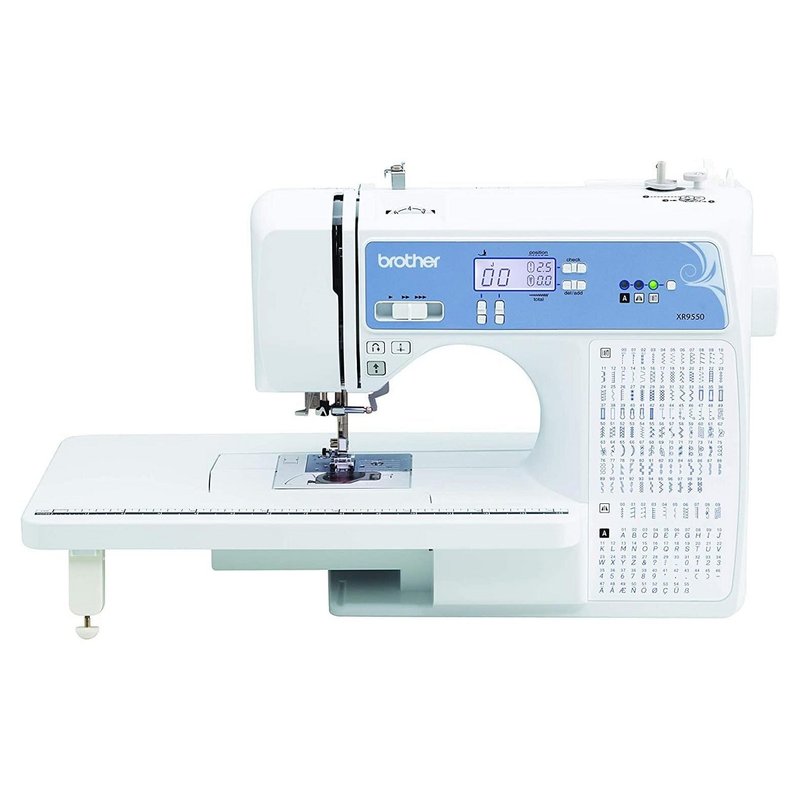
Brother XR9550 machine

Brother XR9550

Mid-range price range

165 stitches, eight one-step buttonholes, an oversized wide table and a hard case; Good Housekeeping’s best overall.

See features ›
Best sewing and embroidery combo#6
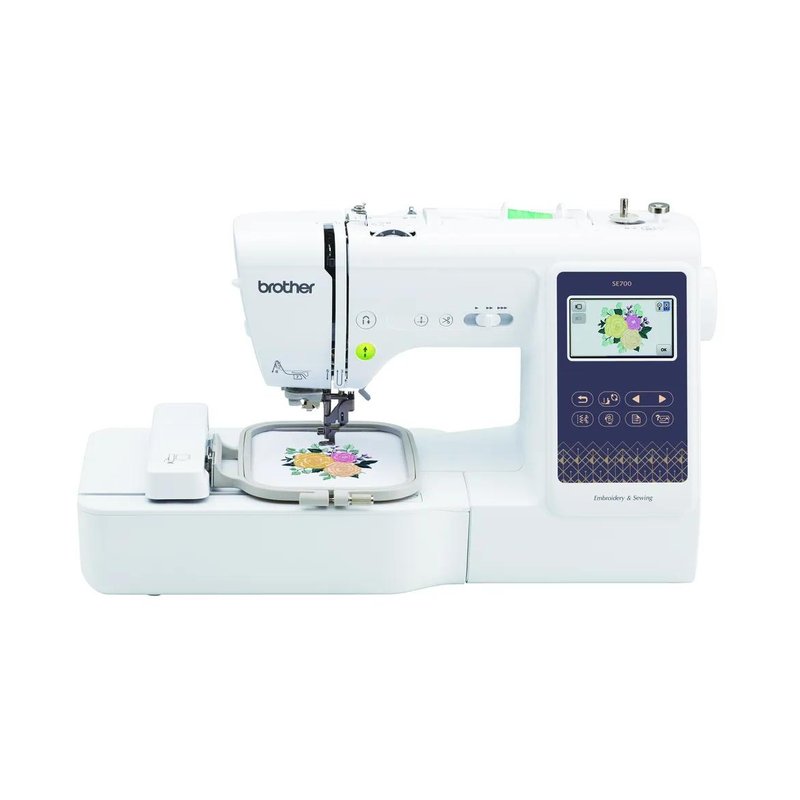
Brother SE700 machine

Brother SE700

Premium price range

A full sewing machine with a 4×4-inch embroidery unit, 135 designs and wireless design transfer.

See features ›
Best to grow into#7
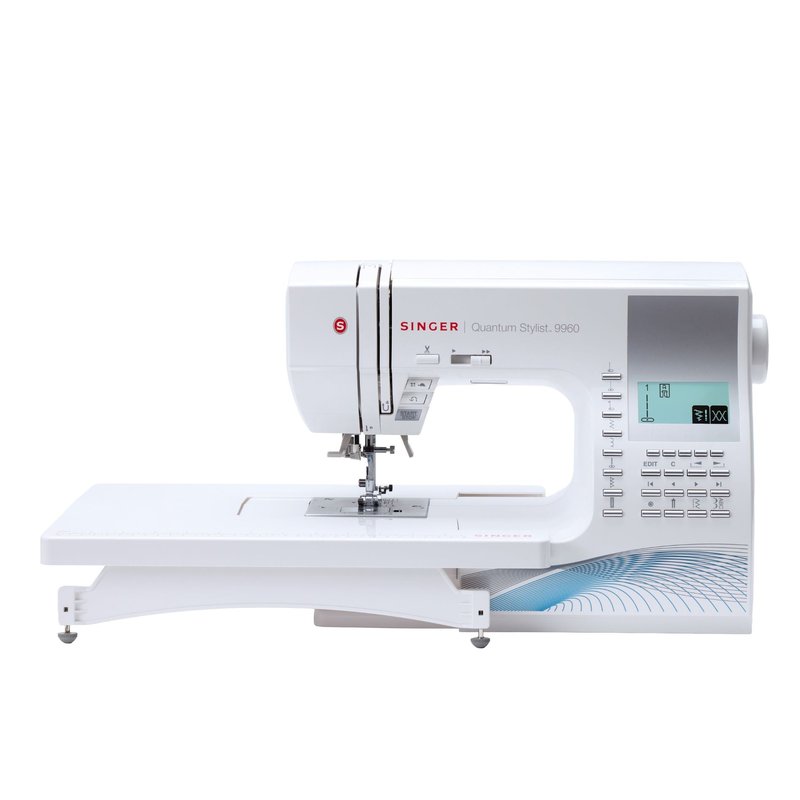
Singer Quantum Stylist 9960 machine

Singer Quantum Stylist 9960

Premium price range

600 stitches, thread cutter, needle up/down and speed control, for beginners sure they will keep sewing.

See features ›

Prices change often, so we show a price range instead of a number. Budget is under $150, Mid-range $150–$350, Premium over $350, based on typical list prices.

Find your match

Start from your project, not the brand

The right first machine depends on what you plan to sew. Pick the line that sounds most like you.

Brother XR9550 machine

I want to make my own clothes

Start with

Brother XR9550

Garments need a good straight stitch and zigzag, stretch stitches for knits, a free arm for sleeves and a one-step buttonhole you can trust.

Singer Heavy Duty 4452 machine

I’ll hem jeans and sew canvas

Start with

Singer Heavy Duty 4452

Thick seams need a jeans needle, a slow steady speed and a machine with some weight and presser-foot pressure behind it.

Brother CS7000X machine

I want to start quilting

Start with

Brother CS7000X

Look for a wide extension table, a walking foot, a 1/4-inch foot and a way to drop or cover the feed dogs for free-motion work.

Brother SE700 machine

I want to embroider names and designs

Start with

Brother SE700

Regular decorative stitches are not embroidery. You need an embroidery machine or a combo with a hoop, built-in designs and design transfer.

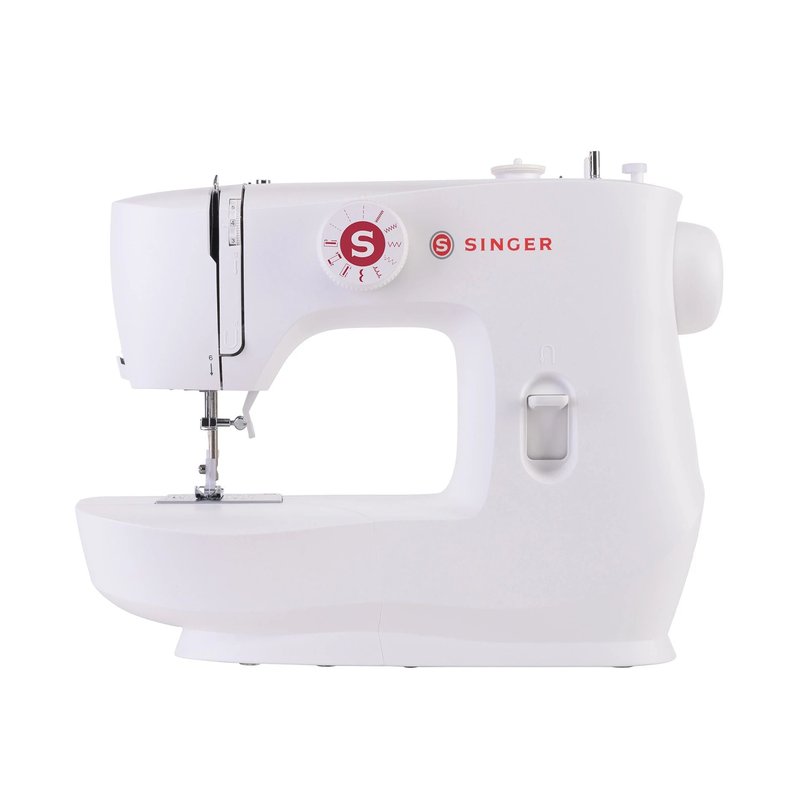
Singer MX60 machine

It’s for my child or teen

Start with

Singer MX60

Simple controls, few settings and an adult nearby matter more than stitch count. A speed slider or finger guard helps younger sewists.

Brother XM2701 machine

I want the cheapest real machine

Start with

Brother XM2701

Skip toy and handheld machines. A budget dial machine from a major brand still gives you a locking stitch, zigzag and a buttonhole.

Our picks in detail

What each machine does well, and who should skip it

Specifications are each brand’s own; fit notes draw on sewing educators, brand manuals and independent reviews. We have not tested or used these machines ourselves. How we pick.

Best overall#1

Brother CS7000X

The CS7000X is the machine that turns up most often as the best beginner pick in current roundups, and the spec sheet explains why. Brother pairs the beginner basics (automatic needle threader, drop-in bobbin, speed control) with a wide table and a walking foot, so it covers clothes, mending and a first quilt without buying extras.

Why it stands out

  • 70 built-in stitches and seven one-step, auto-size buttonhole styles, selected on an LCD (Brother’s figures).
  • Adjustable speed control, a free arm and a drop feed for free-motion quilting, per Brother.
  • Brother lists 10 feet including walking and quilting feet, a detachable wide table, a hard cover and a 25-year limited warranty.
TypeComputerized, LCD
Stitches / designs70 stitches
ThreadingAuto needle threader, drop-in bobbin
Buttonhole7 one-step styles
In the boxWide table, 10 feet incl. walking foot, hard cover

Good fit if

  • You want one machine for garments, home projects and first quilts.
  • You want to learn slowly with a speed slider instead of relying on the pedal.
  • You like getting the wide table and walking foot in the box.

Skip it if

  • You mostly plan to sew thick denim or canvas — look at the Singer Heavy Duty 4452.
  • You want the plainest dial machine with nothing on a screen — the Brother XM2701 is simpler.

Brother’s CS7000X page lists a 1/4-inch foot in the specifications but leaves it out of the carton contents, so check the product page for exactly what is included.

Best budget#2

Brother XM2701

If you want a real sewing machine without spending much, the XM2701 keeps the two features that make learning easier, an automatic needle threader and a drop-in bobbin, and adds a one-step buttonhole. You choose stitches with a dial, so there is nothing to program.

Why it stands out

  • 27 built-in stitches including a one-step auto-size buttonhole (Brother’s count).
  • Automatic needle threader and a jam-resistant top drop-in bobbin, per Brother.
  • Six feet in the box (buttonhole, button sewing, narrow hemmer, zipper, blind stitch, zigzag) and a 25-year limited warranty.
TypeMechanical, dial
Stitches / designs27 stitches
ThreadingAuto needle threader, drop-in bobbin
Buttonhole1 one-step
In the box6 feet, LED work light

Good fit if

  • You want the cheapest machine that still threads the needle for you.
  • You prefer turning a dial to pressing buttons.
  • You need a light machine for a small space or a class.

Skip it if

  • You want a speed slider — the CS7000X has one.
  • You plan to quilt larger projects — there is no wide table in the box.
Best for denim and heavy fabric#3

Singer Heavy Duty 4452

The Heavy Duty 4452 is a frequent heavy-duty pick in roundups for beginners who know they will sew denim and canvas. Singer builds it around a metal frame and a motor it says is 60% stronger than a standard machine’s, and it ships with a walking foot and a non-stick foot for layers and vinyl.

Why it stands out

  • 32 built-in stitches, a one-step buttonhole, a built-in needle threader and a top drop-in bobbin (Singer).
  • Heavy-duty metal frame, stainless-steel bed plate, adjustable presser foot pressure and up to 1,100 stitches per minute, per Singer.
  • Walking, non-stick, general purpose, zipper, buttonhole and button feet included.
TypeMechanical, metal frame
Stitches / designs32 stitches
ThreadingBuilt-in threader, drop-in bobbin
ButtonholeOne-step
In the boxWalking and non-stick feet, dust cover

Good fit if

  • You will hem jeans, sew canvas bags or work with several layers.
  • You want walking and non-stick feet in the box.
  • You like simple dials.

Skip it if

  • You want a speed limiter while you learn — Singer points to the newer 4552 for speed control.
  • You need to carry the machine often; Singer lists it at 14.6 lb.

“Heavy Duty” is Singer’s name for the line, not a promise to sew anything: home machines still have limits on how many layers they can take. Good Housekeeping also notes that some online reviewers report issues with current units.

Best for quilting on a budget#4

Brother XR3774

The XR3774 is a dial machine that comes ready for quilting: Brother includes a wide table, a walking foot and a quilting foot. NBC Select named it the best overall beginner machine in its guide, and it keeps the automatic needle threader and drop-in bobbin.

Why it stands out

  • 37 built-in stitches and a one-step buttonhole, chosen with a dial (Brother).
  • Wide table, walking foot, quilting foot and quilt guide among eight included feet and accessories.
  • Built-in free arm for sleeves and hems; 1/2/25-year limited warranty.
TypeMechanical, dial
Stitches / designs37 stitches
ThreadingAuto needle threader, drop-in bobbin
Buttonhole1 one-step
In the boxWide table, walking and quilting feet

Good fit if

  • You want to start quilting without paying for a computerized machine.
  • You like simple dial stitch selection.
  • You want the walking foot and wide table without buying them separately.

Skip it if

  • You want a speed slider or needle up/down for free-motion work.
  • You prefer LED lighting — Brother lists a bulb.

For free-motion quilting the XR3774 uses a cover over the feed dogs (darning plate) rather than a drop-feed lever, according to Brother’s specifications.

Best for lots of stitches#5

Brother XR9550

The XR9550 is the stitch-rich computerized option at a mid-range price. Good Housekeeping named it its best overall sewing machine, and Brother includes an oversized wide table and a hard case, which suits beginners who expect to try decorative stitching and lettering.

Why it stands out

  • 165 built-in stitches including 55 alphanumeric, and eight one-step buttonhole styles (Brother).
  • Large LCD for push-button stitch selection, a free arm and a drop feed for free-motion quilting.
  • Oversized wide table, eight feet and a hard case in the box, per Brother.
TypeComputerized, LCD
Stitches / designs165 stitches (55 alphanumeric)
ThreadingBrother threading system, Quick-Set bobbin
Buttonhole8 one-step styles
In the boxWide table, 8 feet, hard case

Good fit if

  • You want lots of stitches and simple lettering.
  • You sew garments and want several buttonhole styles.
  • You want a wide table and case included.

Skip it if

  • You want a dial machine with nothing to program.
  • You mostly sew heavy fabrics.
Best sewing and embroidery combo#6

Brother SE700

The SE700 is a full sewing machine with a 4×4-inch embroidery unit, which makes it the most flexible first machine for anyone curious about embroidery. NBC Select calls it its best multitasker for beginners, and Brother adds wireless design transfer and the free Artspira app.

Why it stands out

  • 103 sewing stitches, 10 one-step buttonhole styles, 135 embroidery designs and 10 fonts (Brother).
  • Color LCD with simple on-screen editing; designs arrive by wireless LAN, Brother’s free PC software or the Artspira app.
  • Automatic thread cutter, advanced needle threader, 4×4 hoop, 8 feet and a 25-year limited warranty.
TypeSew and embroider, 4×4 in field
Stitches / designs103 stitches, 135 designs
ThreadingAdvanced threader, auto thread cutter
Buttonhole10 one-step styles
In the box4×4 hoop, 8 feet, wireless design transfer

Good fit if

  • You want one machine for seams and small embroidery: names, monograms, patches.
  • You like sending designs wirelessly instead of using USB sticks.

Skip it if

  • You already know you want designs larger than 4×4 inches — look at the SE2000.
  • You already own a good sewing machine and only want embroidery — the PE545 costs less.

Brother’s page describes a 3.2 x 1.8-inch color LCD; some listings say 3.7 inches. Check the product page.

Best to grow into#7

Singer Quantum Stylist 9960

The Quantum Stylist 9960 is the machine to buy if you are confident you will keep sewing and do not want to upgrade in a year. Singer packs in 600 stitches, a thread cutter, needle up/down and mechanical speed control, and several roundups pick it for quilting.

Why it stands out

  • 600 built-in stitches, five lettering alphabets and 13 one-step buttonhole styles (Singer).
  • Built-in thread cutter, needle up/down, speed control and 6.4 inches of sewing space.
  • Extension table included; Singer lists a 1/5/25-year warranty.
TypeComputerized, LCD
Stitches / designs600 stitches, 5 alphabets
ThreadingBuilt-in threader, drop-in bobbin
Buttonhole13 one-step styles
In the boxExtension table, thread cutter

Good fit if

  • You expect to sew often, including quilting and decorative work.
  • You want features you will not outgrow.

Skip it if

  • You are not sure you will keep sewing — start with a mid-range machine.
  • You want a light machine; Singer lists 18.2 lb.

Side by side

Compare the specs

Scroll sideways on a phone. Stitch counts and features are each brand’s own figures.

MachineBest forTypeStitches / designsThreadingButtonholePrice range
Brother CS7000XBest overallComputerized, LCD70 stitchesAuto needle threader, drop-in bobbin7 one-step stylesMid-rangeDetails ›
Brother XM2701Best budgetMechanical, dial27 stitchesAuto needle threader, drop-in bobbin1 one-stepBudgetDetails ›
Singer Heavy Duty 4452Best for denim and heavy fabricMechanical, metal frame32 stitchesBuilt-in threader, drop-in bobbinOne-stepMid-rangeDetails ›
Brother XR3774Best for quilting on a budgetMechanical, dial37 stitchesAuto needle threader, drop-in bobbin1 one-stepMid-rangeDetails ›
Brother XR9550Best for lots of stitchesComputerized, LCD165 stitches (55 alphanumeric)Brother threading system, Quick-Set bobbin8 one-step stylesMid-rangeDetails ›
Brother SE700Best sewing and embroidery comboSew and embroider, 4×4 in field103 stitches, 135 designsAdvanced threader, auto thread cutter10 one-step stylesPremiumDetails ›
Singer Quantum Stylist 9960Best to grow intoComputerized, LCD600 stitches, 5 alphabetsBuilt-in threader, drop-in bobbin13 one-step stylesPremiumDetails ›

Want to see more than our seven picks?

Browse more beginner machines ›

Not sure where to start?

Most beginners do well with a machine that threads the needle, takes a drop-in bobbin and lets you slow down. The Brother CS7000X adds a wide table and walking foot, so it grows into quilting too. Stitches, included feet and what’s in the box are on the product page.

How to choose

Five things that matter more than the brand

Most frustrating first machines are either missing the features that make learning easy or simply wrong for the fabric you want to sew.

01

An automatic threader and a drop-in bobbin

These two features remove most first-week frustration. Singer recommends top drop-in bobbins for beginners because they are easier to load and you can see when thread runs low.

02

A way to control speed

A speed slider lets you sew slowly without a heavy foot. Singer says adjustable speed control helps new sewists learn more safely, and Simply Sewing prefers it to relying on the pedal alone.

03

A one-step buttonhole

A one-step foot measures the button and sews a matching buttonhole in one pass, according to Singer. Four-step buttonholes work, but you sew each side in stages with the dial.

04

Stitch count matters less than you think

Most sewing uses a straight stitch and a zigzag. An FIT professor quoted by NBC Select says beginners need little more, and Popular Science adds that the automatic buttonhole is a feature people often miss.

05

A machine that fits what you will sew

Denim needs a sturdier machine and a jeans needle; quilts need table space and a walking foot; embroidery needs a hoop and designs. Decide the project first, then the machine.

FAQ

Beginner sewing machines: questions answered

Straight answers to the questions people ask before buying, drawn from brand manuals, sewing educators, university extension guides and independent reviews.

Choosing your first sewing machine5

What is the best sewing machine for a beginner?

For most beginners, a mid-range machine with an automatic needle threader, a drop-in bobbin, speed control and a one-step buttonhole is the safest choice. That is why our best overall pick is the Brother CS7000X, which Good Housekeeping, HGTV and BestReviews also rank at or near the top for beginners. If your budget is tight, the Brother XM2701 keeps the threader, drop-in bobbin and one-step buttonhole.

Should a beginner buy a mechanical or computerized sewing machine?

Either works, and the experts disagree. An FIT professor quoted by NBC Select advises avoiding highly computerized machines because repairs cost more, while Reviewed recommends computerized if your budget allows and So Sew Easy says the screen does the thinking for absolute beginners. Mechanical machines use dials and cost less; computerized ones add an LCD, more stitches and usually a speed slider.

Is Brother or Singer better for beginners?

Both make good beginner machines, and Popular Science names Singer and Brother the most reliable brands on the US market. On this page, Brother supplies most of the easy, feature-rich picks (CS7000X, XR3774, XM2701), while Singer’s strength is heavy-duty machines such as the Heavy Duty 4452, a common pick in roundups. Warranty terms are similar: Brother lists 25 years on the head, and Singer’s warranty page lists 25 years on the head for its heavy-duty and starter tier, though the Heavy Duty product pages’ spec line says 24 years.

How many stitches does a beginner sewing machine need?

Fewer than the box suggests. Singer says beginners mainly need a straight stitch, a zigzag and a buttonhole, and an FIT professor told NBC Select that a great zigzag and straight stitch are all you need. Which? suggests several straight-stitch lengths, a choice of zigzags and an automatic buttonhole as the minimum. Extra decorative stitches are nice but rarely the reason a machine is easy to learn on.

Are mini or handheld sewing machines good for beginners?

Generally not. Kristine Frailing of The New York Sewing Center told NBC Select that beginners should avoid mini machines because they are only useful for very minor repairs. Handheld machines sew a single chain stitch that can unravel unless both ends are knotted, according to The Creative Curator. A budget full-size machine such as the Singer M1500 or Brother XM2701 is a better first buy.

Know what you need? Our best overall pick suits most beginners.See what’s in the box
Features that make sewing easier5

Is an automatic needle threader worth it?

Yes, for most beginners. Singer calls an automatic needle threader a huge time-saver that reduces frustration. Note the limits: one Brother manual says its threader works with needles from 75/11 to 100/16 but not with twin or wing needles, so you will still thread some needles by hand. Machines without one, such as the Janome 2212, are perfectly usable if your eyesight and patience are good.

Drop-in or front-loading bobbin: which is easier?

A drop-in (top-loading) bobbin is easier for most beginners. Singer recommends top drop-in bobbins because they are easier to load and monitor, and Consumer Reports notes the clear cover shows when thread is running low. Front-loading bobbins sit in a metal case behind the accessory box; Janome Australia says they can be challenging for some people. Use only the bobbin class your manual names.

Do I need speed control on a sewing machine?

It helps a lot while you learn. Singer says adjustable speed control helps new sewists learn more safely, and Simply Sewing recommends a speed slider over relying only on the foot pedal because feet can slip. Many mechanical machines rely on the pedal alone. If speed control matters to you, look at the Brother CS7000X or Singer Quantum Stylist 9960.

What is a one-step buttonhole?

It is a buttonhole sewn in one pass using a foot that measures your button. Singer says the one-step foot makes every buttonhole uniform however many you sew. A four-step buttonhole is sewn in stages, one side at a time, by turning the stitch dial. Sew4Home adds that one-step buttonholes work best with flat buttons, and suggests always sewing a test buttonhole on a scrap first.

What does a free arm do?

A free arm lets you slide tubes of fabric, such as sleeves, cuffs and pant legs, around the sewing area. You expose it by removing the flat-bed accessory tray, as a Brother sewing guide explains, and Singer says it makes sleeves and cuffs easier. Most of the sewing machines on this page have one; it matters most if you plan to make or hem clothes.

Want a machine with all of these features?See full specs
Price and value5

How much should I spend on a beginner sewing machine?

Most sources land somewhere between about $120 and $350 for a reliable first machine. An FIT professor told NBC Select that $200 to $350 is a fair price for a quality beginner machine, So Sew Easy suggests $120 to $350, and HGTV puts entry-level machines at about $100 to $200. Below that range you trade away features such as automatic threading; above it you pay for features beginners rarely use at first.

Is a cheap sewing machine worth buying?

A budget machine from a major brand can be, but very cheap toy-style or mini machines usually are not. The FIT professor quoted by NBC Select says a $79 machine is not really worth buying, and So Sew Easy says that below about $120 you are gambling on reliability. Budget picks such as the Brother XM2701 still include an automatic needle threader and a one-step buttonhole.

What extra costs come with a sewing machine?

Plan for thread, needles, fabric and basic tools. Utah State University Extension lists pins, a pincushion, dressmaker shears, a tape measure and a seam ripper as basics, and Seamwork adds chalk or a marker and an iron. Needles wear out: Singer suggests replacing them every 6 to 8 hours of sewing in one guide and 8 to 10 in another, and a designer quoted by NBC Select advises paying a little more for quality thread.

Should I buy a used or vintage sewing machine?

It can save money, but check it carefully. Gathered advises asking to see a used machine working before you buy and warns that vintage models can be costly to repair and have hard-to-find parts. Brother’s US warranty applies only to machines bought from an authorized reseller, and Singer covers refurbished machines bought directly from it for 90 days.

How long do sewing machine warranties last?

Brother lists 25 years on the machine head for its main beginner machines, and Singer’s warranty page lists 25 years on the head for its heavy-duty and starter tier, though the Heavy Duty product pages’ spec line says 24 years; coverage on electronics and labor is much shorter. Brother’s US terms cover parts and labor for 1 year and electronic components for 2 years; Singer’s heavy-duty and starter tier covers motors and electronics for 2 years and adjustments for 90 days. Keep your dated receipt.

Shopping on a budget? See our budget pick’s full specs.See details
Fabrics and projects5

Can a beginner sewing machine sew denim?

Yes, within limits, if you use the right needle and go slowly. Schmetz says denim needles should be at least 90/14 and possibly 100/16, and Singer recommends 90/14 to 100/16 for denim and canvas. A Brother manual cautions that forcing fabric more than about 1/4 inch thick can break the needle. Singer designs the Heavy Duty 4452 for denim to canvas and lists adjustable presser foot pressure.

Which sewing machine is best for making clothes?

Look for a free arm, stretch stitches for knits, a good zigzag and a one-step buttonhole. Our pick for clothes is the Brother XR9550, which has eight one-step buttonhole styles and a free arm according to Brother. For knits, Tilly and the Buttons recommends a ballpoint needle and a narrow zigzag, which any of our picks can sew.

What do I need in a sewing machine for quilting?

Table space and the right feet matter most. Missouri Star says a walking foot feeds all three quilt layers evenly, the American Quilter’s Society says free-motion quilting needs feed dogs that drop or can be covered, and Meissner Sewing recommends an extension table. The Brother CS7000X includes a wide table, walking foot and drop feed, per Brother.

Can I sew leather on a home sewing machine?

Light leather and faux leather, sometimes; thick leather, usually not well. Schmetz makes a leather needle for leather and heavy non-woven synthetics, and a Brother manual suggests a dual feed foot when leather or vinyl sticks to the presser foot. Sewingmachinesplus.com says standard home feed dogs struggle with thick stacks of leather or upholstery, which is where industrial machines take over.

Do beginners need a serger?

No. Which? says an overlocker cannot be used on its own and supplements a regular sewing machine, and Madam Sew says a serger cannot replace a sewing machine. A serger trims and overlocks seam edges with three to five threads, according to AllFreeSewing. Many sewists add one later for knits; until then, a zigzag or overcast stitch finishes edges well.

Sewing jeans and canvas? Read what owners of our heavy-duty pick say.What sewists say
Embroidery machines5

Can a regular sewing machine do embroidery?

Not in the way most people mean. Regular machines sew decorative stitches, but Bob Vila notes that embroidery machines are specialized machines that embroider programmed designs, distinct from machines with decorative stitches; Wikipedia explains the fabric is held in a hoop with stabilizer. If you want names, monograms or pictures, you need an embroidery machine or a sewing and embroidery combo such as the Brother SE700.

What is the best embroidery machine for beginners?

For most beginners we suggest the Brother SE700, because it sews as well as embroiders and NBC Select calls it its best multitasker for beginners. If you already own a sewing machine, the embroidery-only Brother PE545 has the same 4×4-inch field and 135 designs, per Brother. For bigger designs, look at a 5×7-inch machine such as the Brother PE900.

What does a 4×4 or 5×7 embroidery field mean?

It is the largest design the machine can stitch in one hooping, measured in inches. Brother lists 4×4 inches for the SE700, PE545 and Skitch PP1, and 5×7 inches for the PE900 and SE2000. The Sewing Studio suggests a design that fits a 4-inch hoop for a first project, avoiding very large, dense or many-colored designs.

What supplies does machine embroidery need?

Beyond the machine you need stabilizer, embroidery thread, bobbin thread and embroidery needles. Embroidery Library names cutaway, tearaway and wash-away as the three main stabilizers, and Sew Daily recommends cutaway for knits and tearaway for most wovens. Kimberbell pairs 40-weight top thread with 60- or 90-weight bobbin thread, and The Sewing Studio suggests 75/11 and 90/14 embroidery needles.

How do I get designs onto an embroidery machine?

Most current Brother machines take designs wirelessly. Brother says the SE700, PE545, PE900 and SE2000 accept files over wireless LAN from its free Design Database Transfer software or the Artspira app, and the Skitch PP1 runs entirely from the free Artspira app. Singer says the SE9180 imports your own designs in .VP3 format from a USB stick. Embroidery files are brand-specific: .PES is Brother’s format.

Curious about embroidery? See what owners of our combo pick say.Read buyer reviews
Learning to sew and sewing with kids5

Can I teach myself to use a sewing machine?

Yes. Seamwork’s beginner guide is written for self-guided learners and advises starting small and practicing often: straight and zigzag rows on 6 x 4-inch rectangles, then a tote bag. Quilting cotton is the easiest fabric to start with, according to Seamwork. Independent sewing shops often offer lessons, NMSU Extension notes, if you want hands-on help.

What should I sew first?

Start with flat, straight-seam projects. BERNINA’s WeAllSew blog calls pillowcases perfect first projects, Seamwork suggests a tote bag, and 4-H programs at the University of Illinois and Cornell start young sewists on pillowcases. FaveCrafts labels elastic-waist pajama pants a beginner project that can be your first piece of clothing.

What age can a child use a sewing machine?

There is no official age, and the advice varies. Quilting Daily says machine sewing is best taught after age 6, Purdue’s Mini 4-H manual marks its one machine project for kindergarten to second grade as needing adult supervision, and Kentucky 4-H suggests its first machine unit for ages 9 to 10. Whatever the age, Brother’s manual says children should be supervised.

Are toy sewing machines worth it for kids?

Usually not. Simply Sewing lists toy-style machines with the drawback that they are more like a toy, and readers in a Threads Magazine forum mostly advised a basic mechanical or used real machine instead. A simple real machine, such as the Singer MX60, plus an adult nearby is a better start.

How do I keep kids safe at a sewing machine?

Supervise, slow down and teach a few rules. WeAllSew recommends setting the slowest speed if the machine has speed control and considering a finger guard, and Ohio State University Extension’s youth rules include keeping fingers away from the needle and not sewing faster than you can control. Brother’s manual says to switch the machine off before working near the needle.

Buying for a young sewist? Browse simple machines.Browse beginner machines
Care and troubleshooting5

Why is my thread bunching under the fabric?

It is almost always the upper threading. Singer says looping on the underside is always a sign the upper thread is not threaded correctly, and advises rethreading with the presser foot up and the needle at its highest point. Threads magazine adds that threading with the foot down keeps the thread out of the tension discs. Also hold both thread tails toward the back when you start.

How often should I change the sewing machine needle?

Sources disagree, so go by hours and symptoms. Singer suggests every 6 to 8 hours in its FAQ and 8 to 10 hours in its needle guide, Janome Australia says 8 hours or four bobbins, and Brother suggests after each project. Schmetz says to change it when you see skipped stitches, shredding thread or hear clicking, and Singer and Janome Australia say to change it after hitting a pin.

Do I need to oil my sewing machine?

Only if your manual says so. A Brother manual states that its machine must not be oiled by the user, while a Janome manual says to oil at least once a year, and Singer says that if your manual has no oiling instructions, the machine was lubricated at the factory. NMSU Extension notes some machines are oil-free and should not be oiled.

How do I clean a sewing machine?

Unplug it and brush out lint from the bobbin area regularly. NMSU Extension says to brush lint from the bobbin case, under the needle plate and around the feed dogs each time you sew, and Janome Australia calls the bobbin holder the dirtiest part of the machine. A Brother manual describes removing the needle plate cover and bobbin case to brush or vacuum the race.

How often should a sewing machine be serviced?

Recommendations range from once a year to every few years. Janome Australia recommends an annual dealer tune-up, Consumer Reports’ archived guide says at least every two years, and Singer suggests a technician every 3 to 4 years and after long periods of non-use. Use an authorized technician while under warranty: NMSU Extension warns other repairs can void it.

Time for fresh supplies? Browse sewing machine needles.Browse needles

How we pick

How this guide is put together

  • We compare each brand’s published specifications: stitches, buttonholes, needle threader, bobbin system, speed control, included feet and warranty.
  • We read brand manuals and support pages, university extension sewing guides, sewing educators and independent reviews.
  • We look for agreement across sources, and we say when sources disagree.
  • We have not tested or used these machines ourselves, and we do not accept free products or payment for placement.

What a beginner machine can and cannot do

A good beginner machine sews clothes, home projects and quilts. It will not turn into an industrial machine for thick leather, and decorative stitches are not the same as embroidery. Match the machine to your projects.

Read how we pick →

Your first machine should make you want to sew more

Pick for the projects you actually plan, check the features that make learning easy, then start with something flat and simple. If you are unsure, start with our best overall pick.